Citater af Ambrose Bierce (1842-1914?).
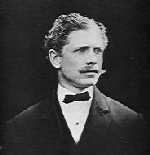 Født i Ohio som det 10. af 13 børn. Kom i lære som typograf, før han gik ind i Kentucky Military Institute i 1859. Bierce meldte sig til Unionshæren, da borgerkrigen brød ud. Han steg hurtigt i graderne fra menig til løjtnant. I slaget ved Kenesaw Mountain fik Bierce et næsten dødeligt sår i hovedet, hvilket førte til hans udtræden. Hans første job indenfor journalistikken var som redaktør for San Francisco News-Letter, og han skrev til den ugentlige klumme "Town Crier." Bierce giftede sig med Mary Ellen Day i 1871, ogdefik 3 børn. Fra 1872-1874 var Bierce i England, hvor han skrev for Figaro, og hvor han publicerede sin første bog, 'The Fiend's Delight' (1873). Han vendte tilbage til San Francisco i 1875, hvor han arbejdede som redaktør ved forskellige blae. Bierce begyndte at skrive for San Francisco Examiner i 1887, mens han arbejdede på sine egne ting. Hans erfaringer fra krigen gav stof til hans første novellesamling, 'Tales of Soldiers and Civilians' (1891). Det følgende år skrev han sit første bind poesi, 'Black Beetles in Amber' (1892). I 1896 blev han sendt til Washington, D.C. af the Examiner. Her blev han politisk reporter. Han er måske bedst kendt for sine satiriske værker, 'Fantastic Fables' (1899) og senere hans berømmede 'The Devil's Dictionary' (1906). I 1913 i en alder af 71 forsvandt Bierce ind i Mexico for at skrive om banditten Pancho Villa, som han beundrede meget. De nøjagtige omstændigheder ved hans død er stadig et mysterium.
Afholdsmand: En svag person, som er faldet for fristelsen til at fornægte sig selv en nydelse.
Amnesti: Statens storsindethed mod de forbrydere, som det vil være for bekosteligt at straffe.
Anklage: At bedyre en andens skyld eller uværdighed, sædvanligvis for at retfærdiggøre over for sig selv, at man har gjort ham uret.
Ass: The masculine of "lass".
Auktionarius: En mand, som proklamerer med en hammer, at han har tømt dine lommer med sin tunge.
Bacchus: En bekvem guddom opfundet i antikken som undskylning for at drikke sig fuld.
Barometer: Et genialt instrument, som angiver hvilket vejr, vi har.
"Bekendtskab: en man kender godt nok til at låne penge af, men ikke godt nok til at man vil låne vedkommende penge
-"
Belladonna: På italiensk en smuk kvinde. På engelsk en dødelig gift. Et slående eksempel på den grundlæggende lighed mellem de to sprog.
Beundring: Vores høflige anerkendelse af en anden persons lighed med os selv.
Brud: en kvinde som har en behagelig forventning om lykke bag sig.
Entusiasme: en uro, der optræder i ungdommen og som kan kureres med små doser anger og erfaring.
Helgen: en synder, som er død, gennemset og rettet.
Hjerne: Et apparat med hvilket vi tænker, at vi tænker.
Indvandrer: En uoplyst person, som anset et land er bedre end et andet.
Kilt: Et kostyme, som undertiden bæres af skotter i Amerika og af amerikanere i Skotland.
Kleptoman: En rig tyv.
Kristen: En person, som tror, at Det Nye Testamente er en guddommeligt inspireret bog, fortræffelig egnet til at dække næstens åndelige behov.
En person, som følger Kristi lære i det omfang, det ikke kolliderer med et liv i synd.
Kujon: En som i farlige situationer tænker med benene.
Kål: En kendt havegrøntsag omtrent så stort og klogt som en mands hoved.
Maling: Kunsten at beskytte en overflade mod vejret og udsætte den for kritik.
Mode: En despot, som den vise gør nar ad - og adlyder.
Rusten: Retfærdighedens sværd.
Råd: Forslag, du giver andre i håb om, at de vil virke til din fordel.
Selvoptaget person: en person med dårlig smag, mere interesseret i sig selv end i mig.
Sex: Der er 3 køn: mænd, kvinder og piger.
Skæbne: Tyrannens ret til forbrydelser og tåbens undskyldning for fejltagelser.
Skønhed: Den magt, ved hjælp af hvilken en kvinde charmerer sin elsker og forfærder sin mand.
Sweater: Klædning, båret af barn, når dets moder synes at det er køligt.
Tandlæge: En taskenspiller, som anbringer metal i din mund, samtidig med at han trækker mønter op af din lomme.
Tålmodighed: en slags lettere fortvivlelse forklædt som dyd.
Venskab: Et skib, som er stort nok til at bære to i godt vejr, men kun én i dårligt.
Zeus: Overhovedet for de græske guder, tilbedt af romerne som Jupiter og af moderne amerikanere som Gud, Guld og Hund.
År: En periode med 365 skuffelser.
Afstand er det eneste, de rige går med til at give de fattige.
Alle er sindsyge, men den, der kan analysere sine vildfarelser, kaldes en filosof.
Bare man dog kunne falde i en kvindes arme uden også at falde i hendes kløer.
Da Eva så sit spejlbillede i en vandpyt, opsøgte hun Adam og beskyldte ham for utroskab.
Der findes to slags ulykker: Uheld som rammer en selv, og held som rammer andre.
En kannibal er en gastronom af den gamle skole, som har bevaret den enkle smag og holder fast ved den naturlige diæt fra før svinekødstiden.
God at æde og gavnlig at fordøje er en orm for en tudse, en tudse for en slange, en slange for et svin, et svin for et menneske og et menneske for en orm.
Had er en rimelig følelse i betragtning af en andens overlegenhed.
Hvad en kvinde beundrer mest hos en mand er, at han gør sig bemærket blandt mænd. Hvad en mand beundrer mest hos en kvinde er, at hun gør ham bemærket.
Hykleri er at trække en ren skjorte over karakteren.
Kedelig er den, som kun vil tale, når du vil have ham til at lytte.
Når Gud skaber en smuk kvinde, åbner djævelen en ny konto.
Når man elsker et dusin gange, vil den sidste kærlighed synes den første. Den, der siger, at han har elsket to gange, har aldrig elsket.
Skønhed er en magt, med hvilken en kvinde fortryller en elsker og forskrækker en ægtemand.
Engelske citater
Absurdity: A statement or belief manifestly inconsistent with one's own opinion.
Academy: A modern school where football is taught.
Acquaintance: A degree of friendship called slight when its object is poor or obscure, and intimate when he is rich or famous.
Acquaintance: A person whom we know well enough to borrow from, but not well enough to lend to.
Admiration: Our polite recognition of another's resemblance to ourselves.
Adore: To venerate expectantly.
Advice: the smallest current coin.
Affliction: An acclimatizing process preparing the soul for another and bitter world.
Age: That period of life in which we compound for the vices that we still cherish by reviling those that we no longer have the enterprise to commit.
Air: A nutritious substance supplied by a bountiful Providence for the fattening of the poor.
Alcohol: (Arabic al kohl, a paint for the eyes.) The essential principle of all such liquids as give a man a black eye.
Allah: The Mohammedan Supreme Being, as distinguished from the Christian, Jewish, and so forth.
Alliance: I international politik, en sammenslutning af to tyve med hænderne så dybt begravet i hinandens lommer, at de ikke hver for sig kan plyndre en tredje.
Alliance: In international politics, the union of two thieves who have their hands so deeply inserted into each others' pockets that they cannot separately plunder a third.
Amnesty: The state's magnanimity to those offenders whom it would be too expensive to punish.
Aphorism: Predigested wisdom.
Applause: The echo of a platitude from the mouth of a fool.
Auctioneer: The man who proclaims with a hammer that he has picked a pocket with his tongue.
Austere: having the quality of an antique virgin, or a legislator approached with a bribe by the side that he has been paid to oppose.<
Bacchus: A convenient deity invented by the ancients as an excuse for getting drunk.
Barometer: An ingenious instrument which indicates what kind of weather we are having.
Battle: A method of untying with the teeth of a political knot that would not yield to the tongue.
Beard: The hair that is commonly cut off by those who justly execrate the absurd Chinese custom of shaving the head.
Beauty: The power by which a woman charms a lover and terrifies a husband.
Belladonna: In Italian a beautiful lady; in English a deadly poison. A striking example of the essential identity of the two tongues.
Bigot: One who is obstinately and zealously attached to an opinion that you do not entertain.
Bore: A person who talks when you wish him to listen.
Boundary: In political geography, an imaginary line between two nations, separating the imaginary rights of one from the imaginary rights of the other.
Brain: an apparatus with which we think we think.
Bride: A woman with a fine prospect of happiness behind her.
Brute: See Husband.
Cabbage: A familiar kitchen-garden vegetable about as large and wise as a man's head.
Childhood: The period of human life intermediate between the idiocy of infancy and the folly of youth ? two removes from the sin of manhood and three from the remorse of age.
Christian: is one who follows the teachings of Christ in so far as they are not inconsistent with a life of sin.
Christian: One who believes that the New Testament is a divinely inspired book admirably suited to the spiritual needs of his neighbour.
One who follows the teachings of Christ in so far as they are not inconsistent with a life of sin.
Clairvoyant: A person, commonly a woman, who has the power of seeing that which is invisible to her patron - namely, that he is a blockhead.
Clarinet: An instrument of torture operated by a person with cotton in his ears. There are two instruments that are worse than a clarinet -- two clarinets.
Clergyman: A man who undertakes the management of our spiritual affairs as a method of bettering his temporal ones.
Commerce: A kind of transaction in which A plunders from B the goods of C, and for compensation B picks the pocket of D of money belonging to E.
Conservative: A statesman who is enamoured of existing evils, as distinguished from the Liberal, who wishes to replace them with others.
Convent: A place of retirement for women who wish for leisure to meditate upon the sin of idleness.
Corporation:An ingenious device for obtaining individual profit without individual responsibility.
Coward: One who in a perilous emergency thinks with his legs.
Cynic: A blackguard whose faulty vision sees things as they are, not as they ought to be. Hence the custom among the Scythians of plucking out a cynic's eyes to improve his vision.
Deluge: A notable first experiment in baptism which washed away the sins (and sinners) of the world.
Delusion: The tither of a most respectable family, comprising Enthusiasm, Affection, Self-Denial, Faith, Hope, Charity and many other goodly sons and daughters.
Dentist: A prestidigitator, who puts metal into your mouth and pulls coins out of your pocket.
Destiny: A tyrant's authority for crime and a fool's excuse for failure.
Dice: Small polka-dotted cubes of ivory, constructed like a lawyer to lie on any side, but commonly on the wrong one.
Dictator: The chief of a nation that prefers the pestilence of despotism to the plague of anarchy.
Diplomacy: the patriotic art of lying for one's country.
Discussion: A method of confirming others in their errors.
Eccentricity: A method of distinction so cheap that fools employ it to accentuate their incapacity.
Education: That which discloses to the wise and disguises from the foolish their lack of understanding.
Egoist: a person more interested in himself than in me.
Elector: One who enjoys the sacred privilege of voting for the man of another man's choice.
Eulogy: Praise of a person who has either the advantages of wealth and power, or the consideration to be dead.
Evangelist: A bearer of good tidings, particularly (in a religious sense) such as assure us of our own salvation and the damnation of our neighbours.
Faith: Belief without evidence in what is told by one who speaks without knowledge, of things without parallel.
Fashion: A despot whom the wise ridicule and obey.
Fiddle: An instrument to tickle human ears by friction of a horse's tail on the entrails of a cat.
Fidelity: A vice peculiar to those who are about to be betrayed.
Fraud: The life of commerce, the soul of religion, the bait of courtship and the basis of political power.
Friend: While your friend holds you affectionately by both your hands you are safe, for you can watch both his.
Friendship A ship big enough to carry two in fair weather, but only one in foul.
Garter: An elastic band intended to keep a woman from coming out of her stockings and desolating the country.
Ghost: The outward and visible sign of an inward fear.
Gold: A yellow metal greatly prized for its convenience in the various kinds of robbery known as trade.
Grapeshot : An argument which the future is preparing in answer to the demands of American Socialism.
Hand: A singular instrument worn at the end of the human arm and commonly thrust into somebody's pocket.
Heathen: A benighted creature who has the folly to worship something that he can see and feel.
Heaven: A place where the wicked cease from troubling you with talk of their personal affairs, and the good listen with attention while you expound your own.
History: An account mostly false, of events mostly unimportant, which are brought about by rulers mostly knaves, and soldiers mostly fools.
Houri: A comely female inhabiting the Mohammedan Paradise to make things cheery for the good Mussulman, whose belief in her existence marks a noble discontent with his earthly spouse, whom he denies a soul.
Imagination: A warehouse of facts, with poet and liar in joint ownership.
Immigrant: An unenlightened person who thinks one country better than another.
Impudence: The stunted and deformed illegitimate offspring of audacity and vulgarity.
Incompatibility: In matrimony a similarity of tastes, particularly the taste for domination
Infidel: In New York, one who does not believe in the Christian religion; in Constantinople, one who does.
Inspiration: Literally, the act of breathing into, as a prophet is inspired by the Spirit, and a flute by an enemy of mankind.
Insurance: An ingenious modern game of chance in which the player is permitted to enjoy the comfortable conviction that he is beating the man who keeps the table.
Interpreter:: One who enables two persons of different languages to understand each other by repeating to each what it would have been to the interpreter's advantage for the other to have said.
Inventor: A person who makes an ingenious arrangement of wheels, levers and springs, and believes it civilization.
Jove: A mythical being whom the Greeks and Romans ridiculously supposed to be the supreme ruler of the universe - unacquainted as they were with our holy religion.
Jury: A number of persons appointed by a court to assist the attorneys in preventing law from degenerating into justice.
Justice: A commodity which in a more or less adulterated condition the State sells to the citizen as a reward for his allegiance, taxes, and personal service.
Kilt: A costume sometimes worn by Scotchmen in America and Americans in Scotland.
King: A male person commonly known in America as a “crowned head,” although he never wears a crown and has usually no head to speak of.
Kleptomaniac: A rich thief.
Knowledge: The small part of ignorance that we arrange and classify.
Koran: A book which the Mohammedans foolishly believe to have been written by divine inspiration, but which Christians know to be a wicked imposture, contradictory to the Holy Scriptures.
Labour: One of the processes by which A acquires property for B.
Lead: A heavy blue-gray metal much used in giving stability to light lovers particularly to those who love not wisely but other men's wives.
Learning: The kind of ignorance distinguishing the studious.
Lecturer: One with his hand in your pocket, his tongue in your ear and his faith in your patience.
Leveller: The kind of political and social reformer who is more concerned to bring others down to his plane than to lift himself to theirs.
Lexicographer: A pestilent fellow who, under the preteens of recording some particular stage in the development of a language, does what he can to arrest its growth, stiffen its flexibility and mechanize its methods.
Love: A temporary insanity, curable by marriage.
Mace: A staff of office signifying authority. Its form, that of a heavy club, indicates its original purpose and use in dissuading from dissent.
Mad: Affected with a high degree of intellectual independence; not conforming to standards of thought, speech and action derived by the conformants from study of themselves; at odds with the majority; in short, unusual.
Magic: An art of converting superstition into coin. There are other arts serving the same high purpose, but the discreet lexicographer does not name them.
Mammon: The god of the world's leading religion. His chief temple is in the holy city of New York.
Marriage, n: the state or condition of a community consisting of a master, a mistress, and two slaves, making in all, two.
Misfortune: The kind of fortune that never misses.
Miss: A title with which we brand unmarried women to indicate that they are in the market.
Mouth: In man, the gateway to the soul; in woman, the outlet of the heart.
Multitude: A crowd; the source of political wisdom and virtue. In a republic, the object of the statesman's adoration.
Nonsense: The objections that are urged against this excellent dictionary.
Orthodox: An ox wearing the popular religious yoke.
Painting: The art of protecting flat surfaces from the weather and exposing them to the critic.
Pantheism: The doctrine that everything is God, in contradistinction to the doctrine that God is everything.
Pantheisme: Doktrinen, at alt er Gud, i modsætning til doktrinen, at Gud er alt.
Pantomime: A play in which the story is told without violence to the language.
Patience: A minor form of despair, disguised as a virtue.
Patriot: One to whom the interests of a part seem superior to those of the whole. The dupe of statesmen and the tool of conquerors.
Peace: In international affairs, a period of cheating between two periods of fighting.
Penitent: Undergoing or awaiting punishment.
Philosophy: A route of many roads leading from nowhere to nothing.
Piano: A parlour utensil for subduing the impenitent visitor. It is operated by pressing the keys of the machine and the spirits of the audience.
Piety: Reverence for the Supreme Being, based upon His supposed resemblance to man. The pig is taught by sermons and epistles / To think the God of Swine has snout and bristles.
Pig: An animal (Porcus omnivorous) closely allied to the human race by the splendour and vivacity of its appetite, which, however, is inferior in scope, for it sticks at pig.
Piracy: Commerce without its folly-swaddles, just as God made it.
Plebiscite: A popular vote to ascertain the will of the sovereign.
Politeness: The most acceptable hypocrisy.
Politics: A means of livelihood affected by the more degraded portion of our criminal classes.
Politics: A strife of interests masquerading as a contest of principles.
Politics: The conduct of public affairs for private advantage.
Polygamy: Too much of a good thing.
Pray: To ask that the laws of the universe be annulled in behalf of a single petitioner, confessedly unworthy.
Prescription: A physician’s guess at what will best prolong the situation with least harm to the patient.
Presentable: Hideously apparelled after the manner of the time and place.
Property: The distinction between a whisky-drinking tramp and a champage-guzzling millionaire.
Provocation: Telling a man his father was a politician.
Quantity: A good substitute for quality, when you are hungry.
Queen: A woman by whom the realm is ruled when there is a king, and through whom it is ruled when there is not.
Quotation: The act of repeating erroneously the words of another.
Quotation: The words erroneously repeated.
Rack: An argumentative implement formerly much used in persuading devotees of a false faith to embrace the living truth.
Rattlesnake: Our prostrate brother, Homo ventrambulans.
Reality: The dream of a mad philosopher.
Recount: In American politics, another throw of the dice, accorded to the player against whom they are loaded.
Relations: People that you call on, or that call on you, according to whether they are rich or poor.
Religion:
- A goodly tree, in which all the foul birds of the air have made their nests.
- A daughter of Hope and Fear, explaining to Ignorance the nature of the Unknowable.
Representative: A gentleman who looks after the interests of his constituents - when they don’t conflict with his own.
Responsibility: A detachable burden easily shifted to the shoulders of God, Fate, Fortune, Luck or one's neighbour. In the days of astrology it was customary to unload it upon a star.
Revelation: A famous book in which St. John the Divine concealed all that he knew. The revealing is done by the commentators, who know nothing.
Revenge: Sending your girl’s love letters to your rival after he has married her.
Revolution: in politics, an abrupt change in the form of misgovernment.
Riddle: Who elects our rulers?
Right: A cipher which is of no value unless the numeral Might is placed in front of it.
Rite: A religious or semi-religious ceremony fixed by law, precept or custom, with the essential oil of sincerity carefully squeezed out of it.
Russia: A person with a Caucasian body and a Mongolian soul.
Rusty: The Sword of Justice.
Saint: A dead sinner revised and edited.
Scriptures: The sacred books of our holy religion, as distinguished from the false and profane writings on which all other faiths are based.
Sex: There are three sexes; males, females and girls.
Slang: A means (under Providence) of setting up as a wit without a capital of sense.
Slang: The grunt of the human hog (Pignoramus intolerabilis) with an audible memory.
Slang: The speech of one who utters with his tongue what he thinks with his ear, and feels the pride of a creator in accomplishing the feat of a parrot.
Sweater: Garment worn by child when its mother is feeling chilly.
Telephone: An invention of the devil which abrogates some of the advantages of making a disagreeable person keep his distance.
Telescope: A device having a relation to the eye similar to that of the telephone to the ear, enabling distant objects to plague us with a multitude of needless details. Luckily it is unprovided with a bell summoning us to the sacrifice.
To be positive: To be mistaken at the top of one's voice.
To be positive: To be mistaken at the top of one's voice.
Truth: An ingenious compound of desirability and appearance.
Ugliness: A gift of the gods to certain women, entailing virtue without humility.
Understanding: A cerebral secretion that enables one having it to know a house from a horse by the roof on the house. Its nature and laws have been exhaustively expounded by Locke, who rode a house, and Kant, who lived in a horse.
Valour: A soldierly compound of vanity, duty and the gambler’s hope.
Vituperation: Satire, as understood by dunces and all such as suffer from an impediment in their wit.
Vote: the instrument and symbol of a free man's power to make a fool of himself and a wreck of his country.
Vote: The instrument and symbol of a freeman’s power to make a fool of himself and a wreck of his country.
Wit: The salt with which the American humorist spoils his intellectual cookery by leaving it out.
Witch: An ugly and repulsive old woman, in a wicked league with the devil.
A beautiful and attractive young woman, in wickedness a league beyond the devil.
Worms' Meat: The finished product of which we are the raw material.
Year: A period of three hundred and sixty-five disappointments.
Yoke: An implement to whose latin name jugum we owe one of the most illuminating words in our language-- a word that defines the matrimonial situation with precision, point, and poignancy.
Zeal: A certain nervous disorder afflicting the young and inexperienced. A passion that goeth before a sprawl.
Zeus: The chief of Grecian gods, adored by the Romans as Jupiter and by the modern Americans as God, Gold, Mob and Dog.
Caaba: A large stone presented by the archangel Gabriel to the patriarch Abraham, and preserved at Mecca. The patriarch had perhaps asked the archangel for bread.
All are lunatics, but he who can analyze his delusions is called a philosopher.
Calamities are of two kinds. Misfortune to ourselves, and good fortune to others.
Cogito cogito ergo cogito sum (I think that I think, therefore I think that I am.)
In our civilization, and under our republican form of government, intelligence is so highly honored that it is rewarded by exemption from the cares of office.
Patience is a minor form of despair, disguised as a virtue.
The covers of this book are too far apart.
The fact that boys are allowed to exist at all is evidence of a remarkable Christian forbearance among men.
There is nothing new under the sun but there are lots of old things we don't know.
We know what happens to people who stay in the middle of the road. They get run over.